Tampa summers are not gentle. The humidity can push indoor spaces into a sticky fog, and when an air conditioner falters at 4 p.m. on a July afternoon, you learn quickly which local pros actually show up and which ones keep you waiting. Good ac repair service in Tampa is less about a flashy truck and more about clear diagnosis, proper parts on hand, and workmanship that stands up to heat, salt air, and long run times. After years of helping homeowners, commercial property managers, and short-term rental hosts in the bay area, I’ve seen what separates reliable technicians from the rest, and how smart maintenance choices trim energy bills while extending system life.
What Tampa’s climate does to air conditioners
Start with the environment. We ask a lot from our systems here. A typical residential unit can run 2,000 to 3,000 hours per year in Hillsborough County, compared with 600 to 1,200 hours in cooler regions. Coastal proximity brings salt-laden air that corrodes fins and exposed copper. Afternoon thunderstorms spike humidity and can trigger brief power dips. Attics can hit 130 degrees, which cooks capacitors and makes condensate drain lines ripe for algae growth. Any honest conversation about ac repair service Tampa residents can trust begins with that backdrop.
Systems aren’t failing in a vacuum, they’re battling heat load, moisture, and air quality challenges unique to the Gulf Coast. When you account for those factors, your repair and maintenance strategy changes, sometimes in small ways that pay big dividends: choosing coated coils if you’re within a few miles of the bay, using float switches on air handlers in garages, installing surge protection, and scheduling coil cleanings more frequently than the national average.
Common Tampa AC issues that trigger service calls
Certain problems show up again and again across Tampa neighborhoods, from Seminole Heights bungalows to newer builds in Westchase and Apollo Beach townhomes. A few patterns stand out.
Capacitor fatigue is the one we see most often around year five to seven. Heat and long duty cycles degrade these inexpensive parts. Symptoms include a compressor that hums but won’t start, or a blower that tries and fails. Many weekend breakdowns trace to a bulging run capacitor. A prepared technician carries a range of microfarad ratings and can get you back online in 30 minutes. It’s the kind of air conditioner repair that rewards prompt diagnosis and a stocked service van.
Clogged condensate drains are next. Algae bloom loves warm, dark, wet PVC. When the drain backs up, the pan switch trips to prevent a ceiling leak. You feel it as a sudden no-cool condition even though the system seemed fine earlier. This is especially common in homes where the air handler sits in the attic. Good pros not only clear the line, they flush it with an appropriate cleaner and recommend a maintenance dose of condensate tablets or vinegar. I’ve had landlords tell me a $10 habit saved them a $2,500 drywall repair.
Refrigerant leaks turn up in older systems that used R‑22, and in newer R‑410A units with backyard corrosion. Many leaks are found at flare fittings, Schrader valves, or rubbed-through tubing near the coil. A proper tampa ac repair approach isolates the leak with nitrogen, confirms with bubbles or electronic sniffers, and only then adds refrigerant after the repair. Topping off without finding the leak is a bandage, not a fix. It also costs you twice, once for the gas and again when it escapes.
Dirty condenser coils reduce heat rejection, raise head pressure, and degrade cooling. In Tampa’s oak-heavy neighborhoods, spring pollen coats fins. Near the bay, salt crystals accelerate oxidation. A careful coil cleaning with the right chemical concentration and low-pressure water can drop head pressure by 20 to 50 psi, often lowering amps enough to hear the change. Beware of blasting with a pressure washer, which folds fins and shortens coil life.
Electrical issues also feature prominently. Heat-baked contactors can weld shut, causing a condenser to run when it shouldn’t. Weak compressor start components mimic hard-start conditions. Loose lugs at the breaker heat up under load. An ac repair service that values safety will cut power, torque-check connections, and measure voltage drop before simply swapping parts.
Finally, airflow and duct problems make many systems look sick when the equipment is fine. Undersized return ducts, crushed flex runs in the attic, or leaky connections at trunk lines drive up static pressure. Then you get coil freeze-ups, poor humidity control, and rooms that never feel right. A truly skilled ac repair Tampa tech carries a manometer and actually measures total external static pressure. It’s the difference between chasing symptoms and fixing the system.
How reliable local pros approach diagnosis
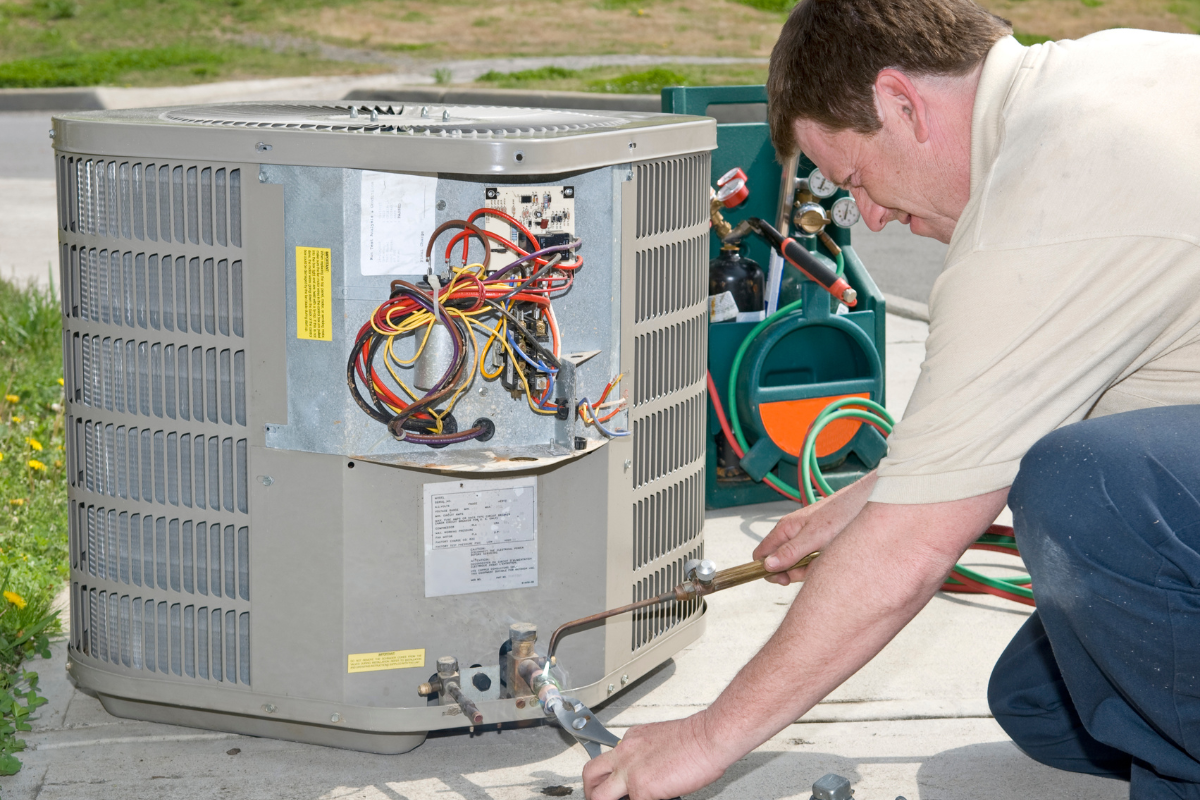
On a hot day, the temptation is to hurry. The best techs resist that. Solid air conditioning repair begins with basics. Verify the thermostat call. Confirm power at the air handler and condenser. Inspect filters. Then move to pressures, superheat or subcool, temperature split, static pressure, and amp draws. Good techs note outdoor and indoor conditions because ambient temperature matters.
When I train new technicians, I frame it as a sequence that avoids blind alleys. First, look. Is the evaporator coil frosted? Is the condenser fan moving the right amount of air? Are fan blade pitch and motor rotation correct? Second, measure. Gauges or a digital manifold for pressures, clamp meters for amps, digital psychrometers for supply and return temps. Third, reason. If subcooling is high and superheat is low, expect an overcharged system or a restricted metering device. If both are high, airflow or load issues enter the picture. This is the kind of methodical process that keeps https://damiennfbh673.huicopper.com/hvac-repair-vs-replacement-making-the-right-choice callbacks down.
For homeowners, you can tell you’re dealing with a pro when they explain the readings plainly. For example, “Your system is showing a 28‑degree delta T across the coil, which is higher than the typical 16 to 22 range. That, plus frost on the suction line, points to restricted airflow or low refrigerant. We’ll rule out airflow first by checking return static and the filter.”
Emergency service, and when to use it
After-hours calls cost more, and for good reason. Staffing a 24/7 schedule, carrying insurance for night work, and paying for dispatch support add overhead. That said, there are situations that justify the premium. Elderly residents or medically fragile family members can’t be without cooling during a heat advisory. Rental properties with arriving guests need immediate help to avoid refunds. A server room can’t wait.
If you’re on the fence, a quick triage can help you decide. Check your breaker and disconnect to ensure you have power. Replace a filthy filter. Inspect the drain pan for water and reset a tripped float switch if you know where it is. If the outdoor unit is iced over, shut the system off and run the fan to thaw before you call. Many times, this heads-off a service call that would be limited by an ice block anyway. If the system still won’t cool, that’s the time to request emergency air conditioning repair with a clear description of symptoms so the dispatch can assign the right technician and parts.
The parts that often fail, and why they do
Capacitors, contactors, blower motors, condenser fan motors, and pressure switches top the failure list. Each one maps closely to Tampa’s operating conditions.
Capacitors, as mentioned, suffer heat stress. You can extend their life by ensuring proper ventilation in attics and using high-quality, name-brand replacements rated for 70 degrees Celsius or better. Some homeowners ask about hard-start kits to help older compressors. These have a place, but they are not a fix-all. Use them when measured start amps justify it, not as a reflex.
Contactors pit and arc over time. If you hear a loud buzz or see heat discoloration, it’s a replacement job. Installing a surge protector on the condenser circuit helps protect boards and contactors from lightning-induced spikes, which are part of living in Tampa.
Blower motors and condenser fan motors work long hours in high heat. Bearing wear shows up as squeal, and winding failures show as a motor that tries to start, then trips. Modern ECM blower motors are efficient but pricier. A good hvac repair technician will diagnose whether a failed ECM is a module issue or a motor issue, because the parts cost differs dramatically.
Pressure switches, especially on heat pumps, can stick because of high head pressure from dirty coils or low airflow. Simply replacing the switch without addressing cause sets you up for a repeat failure during the next heat wave.
Thermostats rarely fail, but wiring to them can. I’ve seen more than one attic rodent chew low-voltage lines. If your thermostat goes blank intermittently, a loose common wire or a weak transformer could be the culprit. These are quick fixes once found.
Repair or replace: making the call with real numbers
No one wants to replace an air conditioner prematurely, yet throwing good money after bad is worse. The decision hinges on age, refrigerant type, repair frequency, efficiency potential, and your time horizon in the home.
Age matters. Many Tampa systems give 10 to 14 years before major components like compressors or coils become questionable. I’ve seen a few soldier on past 18 years with meticulous maintenance, but those are the exceptions. If your unit is older than 12 years and needs a compressor, you’ll likely come out ahead replacing the system.
Refrigerant type is a big factor. R‑22 has been phased out. Prices fluctuate, but they are almost always higher than R‑410A. If you’re spending hundreds just to top off an R‑22 system with a known leak, that money would be better directed toward replacement.
Efficiency improvements are nontrivial. Replacing an 11 SEER system with a 16 to 18 SEER2 unit can trim summer bills by 20 to 40 percent, particularly in a home with long daily runtime. Tampa Electric’s usage data show cooling as a dominant load for much of the year, so those savings compound. For some homes, upgrading ducts at the same time unlocks the full benefit of the new equipment.
A reasonable rule of thumb is the 5,000 rule: multiply the repair cost by the equipment age. If the product exceeds 5,000, consider replacement. For instance, a $1,000 repair on a 7‑year‑old unit yields 7,000, which tilts toward replacement if there are other risk factors. It’s not perfect, but it forces the math.
Time horizon matters. If you plan to sell within a year, a targeted repair that passes inspection might be enough. If you’re settling in for five to ten years, upsizing efficiency and stabilizing your indoor comfort pays back not only in utility costs but in fewer service calls.
<